In today’s fast-growing digital economy, fintech startups are transforming how people send, receive, and manage money. However, with this innovation comes a critical responsibility—securing payments in fintech startups. A single security breach can lead to financial loss, regulatory penalties, and loss of customer trust.
For startups, building a secure payment infrastructure is not optional—it’s essential for long-term growth and credibility. This guide explains how to implement strong fintech payment security strategies to protect your platform and users.
Why Payment Security Matters in Fintech Startups
Fintech companies handle highly sensitive financial data, making them prime targets for cybercriminals. Without proper security:
- Customer data can be stolen
- Fraudulent transactions can increase
- Compliance violations can occur
- Brand reputation can suffer permanently
By focusing on secure payments in fintech startups, businesses can build trust, improve retention, and meet regulatory standards.
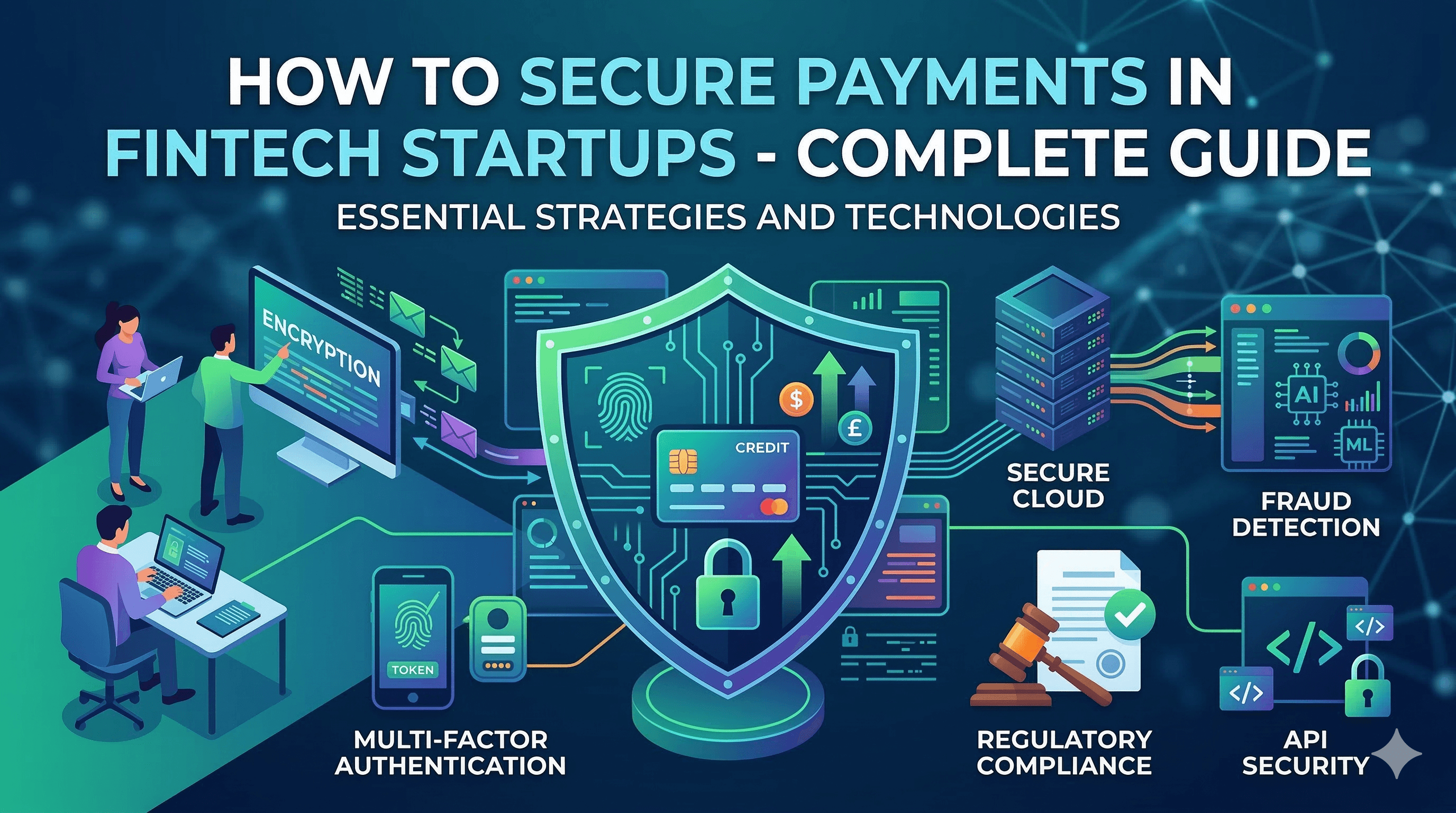
1. Use Strong Encryption to Secure Fintech Payments
Encryption is the backbone of any secure payment system.
- Implement SSL/TLS encryption for data in transit
- Use AES-256 encryption for stored data
- Avoid storing sensitive payment information unless necessary
End-to-end encryption ensures that even if data is intercepted, it remains unreadable.
2. Adopt Tokenization for Secure Digital Payments
Tokenization replaces sensitive payment data with unique tokens.
- Card details are converted into tokens
- Actual data is stored securely by payment providers
- Tokens are useless if intercepted
This approach significantly reduces risk and is widely used in fintech payment security systems.
3. Ensure PCI DSS Compliance
To achieve secure payments in fintech startups, compliance with PCI DSS is mandatory. Key practices include:
- Regular vulnerability assessments
- Secure network configurations
- Access control mechanisms
- Continuous monitoring of transactions
Compliance not only enhances security but also builds credibility with users and partners.
4. Strengthen Security with Multi-Factor Authentication (MFA)
Passwords alone are not enough. MFA adds an extra layer of protection. Common methods:
- One-Time Passwords (OTP)
- Biometric authentication (fingerprint, face recognition)
- Authenticator apps
MFA prevents unauthorized access even if login credentials are compromised.
5. Use AI-Based Fraud Detection Systems
Modern fintech platforms rely on AI to detect fraud in real time.
Key capabilities:
- Behavioral analysis (user spending patterns)
- Transaction velocity checks
- Geolocation tracking
- Risk scoring models
AI-driven systems help prevent fraud before transactions are completed, ensuring secure fintech transactions.
6. Secure APIs and Third-Party Integrations
APIs are essential but can introduce vulnerabilities.
Best practices:
- Use OAuth 2.0 authentication
- Enable API rate limiting
- Encrypt all API communications
- Audit third-party integrations regularly
A secure API ecosystem is critical for maintaining fintech cybersecurity.
7. Monitor Transactions in Real Time
Continuous monitoring helps detect suspicious activity early.
- Track login attempts and transaction behavior
- Set up real-time alerts
- Maintain audit logs for investigations
This ensures quick detection and response to threats.
8. Choose Secure Payment Gateways
Selecting the right payment gateway is crucial for secure payments in fintech startups. Look for features like:
- Built-in fraud detection
- Tokenization support
- PCI DSS compliance
- Global payment capabilities
Trusted gateways reduce the burden of managing security internally.
9. Perform Regular Security Audits and Testing
Security is an ongoing process.
- Conduct penetration testing
- Run vulnerability scans
- Fix security gaps immediately
Regular testing ensures your system stays protected against evolving threats.
10. Educate Users and Employees
Human error is one of the biggest risks in fintech security.
For Users:
- Use strong passwords
- Avoid phishing scams
- Follow secure transaction practices
For Employees:
- Conduct cybersecurity training
- Restrict access based on roles
- Follow secure coding standards
Awareness plays a key role in preventing security breaches.
11. Follow Secure Coding Practices
Developers must build security into the application.
- Validate all inputs
- Prevent SQL injection attacks
- Implement secure session management
- Follow OWASP guidelines
Secure coding reduces vulnerabilities at the core level.
12. Build an Incident Response Plan
Even with strong systems, incidents can occur.
A solid response plan includes:
- Defined response teams
- Immediate containment strategies
- Transparent communication with users
- Post-incident analysis
Preparedness ensures faster recovery and minimizes damage.
Frequently Asked Questions (FAQ)
What are secure payments in fintech startups?
Secure payments in fintech startups refer to implementing technologies and practices like encryption, tokenization, and fraud detection to protect financial transactions and user data.
How can fintech startups prevent payment fraud?
By using AI-based fraud detection, multi-factor authentication, and real-time monitoring, startups can significantly reduce fraud risks.
Why is PCI DSS compliance important?
PCI DSS ensures that fintech companies follow industry standards for handling card data securely, reducing the risk of breaches.
What is the role of tokenization in payment security?
Tokenization replaces sensitive data with non-sensitive tokens, making it useless for hackers even if intercepted.
Is payment security expensive for startups?
No. Many scalable and cloud-based solutions make it affordable to implement strong security measures.
Conclusion : Build Trust with Secure Fintech Payments
Securing payments in fintech startups requires a multi-layered approach that combines encryption, compliance, fraud detection, and user awareness. By implementing these strategies, startups can protect sensitive data, prevent fraud, and build long-term customer trust.
Looking to build a secure fintech platform?
Start implementing these payment security best practices today and create a safe, scalable, and compliant financial ecosystem for your users.