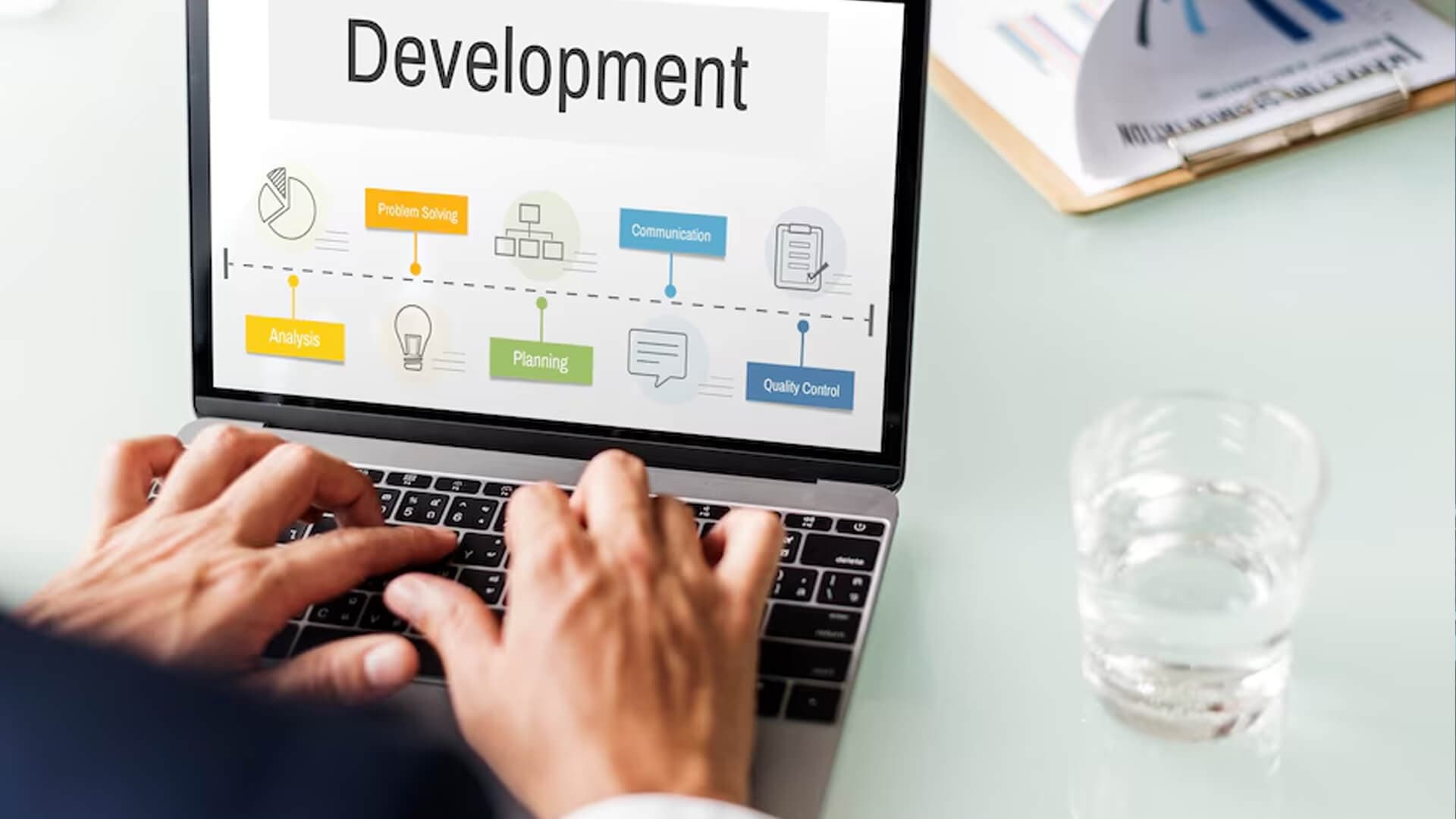
In the dynamic realm of technology, successful product development requires more than technical skills—it demands a strategic approach that balances user needs, business objectives, and technical feasibility. This comprehensive guide explores modern product development methodologies, best practices, and strategies for creating products that transform industries.
The Product Development Landscape
Product development has evolved significantly, driven by changing user expectations, emerging technologies, and faster market cycles.
Modern Product Development Challenges
| Challenge | Impact | Solution Approach |
|---|---|---|
| Rapid Market Changes | Short product lifecycles | Agile, iterative development |
| User Expectations | Demand for seamless experiences | Human-centric design |
| Technical Complexity | Integration challenges | Modular architecture |
| Time-to-Market Pressure | First-mover advantage | MVP and continuous delivery |
| Resource Constraints | Budget and talent limitations | Prioritization and automation |
Product Development Maturity Levels
- Level 1: Ad-hoc
- Reactive development
- No formal process
- Inconsistent outcomes
- Level 2: Defined
- Basic processes documented
- Project-based approach
- Limited metrics
- Level 3: Managed
- Standardized practices
- Agile adoption
- Quality focus
- Level 4: Optimized
- Continuous improvement
- Data-driven decisions
- Predictable delivery
- Level 5: Innovative
- Experimental culture
- Customer obsession
- Industry leadership
Ideation and Opportunity Discovery
Great products begin with identifying the right problems to solve.
Ideation Methods
- Market-Driven
- Competitive analysis
- Market gap identification
- Trend monitoring
- Industry research
- User-Driven
- Customer interviews
- Observation studies
- Support ticket analysis
- Feedback mining
- Technology-Driven
- Emerging tech assessment
- Capability exploration
- R&D initiatives
- Patent analysis
- Creative Techniques
- Brainstorming sessions
- Design sprints
- Hackathons
- Cross-functional workshops
Opportunity Assessment Framework
| Criteria | Questions to Answer |
|---|---|
| Problem Significance | How painful is the problem? |
| Market Size | How many people have this problem? |
| Willingness to Pay | Will customers pay for a solution? |
| Competition | Who else is solving this? |
| Feasibility | Can we build this? |
| Strategic Fit | Does it align with our strengths? |
Validation Process
- Problem Validation
- User interviews (20-30)
- Survey research
- Support data analysis
- Market research
- Solution Validation
- Concept testing
- Prototype feedback
- Landing page tests
- Competitor comparison
- Business Validation
- Financial modeling
- Pricing research
- Channel analysis
- Resource assessment
- Technical Validation
- Feasibility study
- Technology spikes
- Architecture review
- Risk assessment
Human-Centric Design
Successful products are built around deep understanding of user needs and behaviors.
Design Thinking Framework
Design thinking follows five iterative phases to create user-centered solutions:
- Empathize — Understand users through interviews, observation, and immersion in their experiences
- Define — Synthesize research into clear problem statements and design challenges
- Ideate — Generate a wide range of creative solutions through brainstorming and collaboration
- Prototype — Build quick, low-fidelity representations of potential solutions
- Test — Validate prototypes with real users, gather feedback, and iterate
This non-linear process encourages teams to revisit earlier phases as new insights emerge, ensuring the final product truly addresses user needs.
User Research Methods
| Method | When to Use | Output |
|---|---|---|
| User Interviews | Problem discovery, validation | Qualitative insights |
| Surveys | Quantitative validation | Statistical data |
| Usability Testing | Prototype evaluation | Usability issues |
| A/B Testing | Feature optimization | Performance data |
| Analytics | Behavior understanding | Usage patterns |
| Diary Studies | Long-term behavior | Contextual insights |
User Persona Template
- Identity
- Name and photo
- Demographics
- Role/occupation
- Technical proficiency
- Goals
- Primary goals
- Secondary goals
- Success metrics
- Frustrations
- Current pain points
- Workarounds used
- Unmet needs
- Behaviors
- Daily routines
- Tool preferences
- Decision factors
- Information sources
- Scenarios
- Typical use cases
- Edge cases
- Context of use
Agile Development Methodology
Agile enables teams to deliver value incrementally while adapting to change.
Agile Frameworks Comparison
| Framework | Best For | Sprint Length | Team Size |
|---|---|---|---|
| Scrum | Product development | 2 weeks | 5-9 |
| Kanban | Continuous flow | N/A | Any |
| SAFe | Enterprise scale | 2 weeks | Multiple teams |
| XP | Technical excellence | 1-2 weeks | 5-12 |
| Lean Startup | Uncertain markets | Varies | Small |
Scrum Framework
- Roles
- Product Owner
- Vision keeper
- Backlog manager
- Stakeholder liaison
- Scrum Master
- Process facilitator
- Blocker remover
- Coach
- Development Team
- Self-organizing
- Cross-functional
- Accountable
- Product Owner
- Events
- Sprint Planning
- Daily Scrum
- Sprint Review
- Retrospective
- Artifacts
- Product Backlog
- Sprint Backlog
- Increment
User Story Format
"As a [role], I want [action], so that [benefit]."
Example: "As a project manager, I want to view the team dashboard, so that I can track sprint progress."
Acceptance Criteria use the Given/When/Then format to define testable conditions for each story.
INVEST Criteria ensure well-crafted stories:
- Independent — Can be developed separately from other stories
- Negotiable — Open to discussion and refinement
- Valuable — Delivers clear user or business value
- Estimable — Can be sized by the development team
- Small — Fits within a single sprint
- Testable — Has clear acceptance criteria for validation
Cutting-Edge Technologies
Modern products leverage emerging technologies to create differentiated experiences.
Emerging Technologies in Product Development
- Artificial Intelligence
- Machine learning models
- Natural language processing
- Computer vision
- Recommendation systems
- Predictive analytics
- Cloud & Infrastructure
- Serverless computing
- Edge computing
- Kubernetes orchestration
- Multi-cloud strategies
- Infrastructure as Code
- Modern Architecture
- Microservices
- Event-driven systems
- API-first design
- GraphQL
- Real-time data
- Mobile & Cross-Platform
- React Native
- Flutter
- Progressive Web Apps
- Super apps
- Emerging Frontiers
- Blockchain/Web3
- AR/VR experiences
- IoT integration
- Voice interfaces
- Quantum computing
Technology Selection Framework
| Factor | Considerations |
|---|---|
| Maturity | Production-readiness, community support |
| Scalability | Growth accommodation |
| Team Skills | Learning curve, hiring market |
| Cost | Licensing, infrastructure, maintenance |
| Integration | Ecosystem compatibility |
| Security | Compliance, vulnerabilities |
MVP and Product Validation
Minimum Viable Products enable rapid learning with minimal investment.
MVP Development Approach
- Define MVP Scope
- Core value proposition
- Must-have features
- Nice-to-have (defer)
- Success metrics
- Build MVP
- Time-boxed development
- Focus on learning
- Accept technical debt
- Ship quickly
- Launch & Measure
- Target early adopters
- Collect quantitative data
- Gather qualitative feedback
- Monitor behavior
- Learn & Iterate
- Analyze results
- Validate hypotheses
- Pivot or persevere
- Plan next iteration
MVP Types
| MVP Type | Description | Best For |
|---|---|---|
| Concierge | Manual service delivery | Service validation |
| Wizard of Oz | Fake automation | Complex product concepts |
| Landing Page | Value proposition test | Demand validation |
| Single Feature | One core function | Feature-specific learning |
| Piecemeal | Existing tool combination | Process validation |
| Prototype | Interactive mockup | UX validation |
Product Scaling
Growing products require strategic scaling of architecture, teams, and processes.
Product Scaling Framework
- Technical Scaling
- Architecture evolution
- Monolith to microservices
- Database sharding
- Caching layers
- CDN implementation
- Performance optimization
- Load balancing
- Auto-scaling
- Code optimization
- Query optimization
- Reliability
- Redundancy
- Disaster recovery
- Monitoring
- Incident response
- Architecture evolution
- Team Scaling
- Team structure
- Squad model
- Guilds and chapters
- Platform teams
- Process scaling
- Documentation
- Onboarding
- Knowledge sharing
- Team structure
- Product Scaling
- Feature expansion
- Market expansion
- Platform strategy
- Ecosystem development
Scaling Metrics
| Area | Metrics |
|---|---|
| Performance | Response time, throughput, error rate |
| Reliability | Uptime, MTTR, incident frequency |
| Capacity | Active users, data volume, transactions |
| Team | Velocity, cycle time, deployment frequency |
| Business | Revenue, retention, NPS |
Custom Solutions
Different contexts require tailored product development approaches.
Product Development by Type
- B2B SaaS
- Multi-tenancy architecture
- Enterprise integrations
- Role-based access
- Compliance requirements
- Consumer Applications
- Scalability focus
- UX excellence
- Viral mechanics
- Analytics-driven
- Platform Products
- API-first design
- Developer experience
- Ecosystem strategy
- Marketplace dynamics
- IoT Products
- Hardware integration
- Edge computing
- Connectivity management
- OTA updates
- Enterprise Software
- Integration complexity
- Customization needs
- Security requirements
- Change management
SaaS Product Development
Software as a Service requires specific architectural and business considerations.
SaaS Architecture Patterns
- Multi-Tenancy
- Shared database
- Database per tenant
- Hybrid approach
- Subscription Management
- Billing integration
- Plan management
- Usage tracking
- Invoicing
- Security
- Authentication (SSO, MFA)
- Authorization (RBAC)
- Data isolation
- Compliance (SOC 2, GDPR)
- Operations
- Monitoring & alerting
- Deployment automation
- Feature flags
- A/B testing
SaaS Metrics
| Metric | Definition | Benchmark |
|---|---|---|
| MRR | Monthly Recurring Revenue | Growth trend |
| Churn Rate | Customer loss rate | <5% monthly |
| CAC | Customer Acquisition Cost | <LTV/3 |
| LTV | Lifetime Value | >3x CAC |
| NRR | Net Revenue Retention | >100% |
Product Analytics
Data-driven decisions improve product outcomes.
Product Analytics Stack
- Data Collection
- Event tracking
- User properties
- Session data
- Feature usage
- Analysis
- Funnel analysis
- Cohort analysis
- Retention curves
- Feature adoption
- Experimentation
- A/B testing
- Multivariate tests
- Feature flags
- Gradual rollouts
- Insights
- Dashboards
- Reports
- Alerts
- Recommendations
Key Product Metrics
| Category | Metrics |
|---|---|
| Acquisition | Sign-ups, activation rate, source |
| Engagement | DAU/MAU, session length, feature usage |
| Retention | D1/D7/D30 retention, churn |
| Revenue | ARPU, conversion, expansion |
| Satisfaction | NPS, CSAT, support tickets |
Working with Innoworks
At Innoworks, we transform product visions into reality:
Our Product Development Services
| Service | Description |
|---|---|
| Product Strategy | Vision, roadmap, market positioning |
| UX/UI Design | Research-driven design |
| Custom Development | Full-stack implementation |
| MVP Development | Rapid validation |
| Product Scaling | Architecture evolution |
| Ongoing Support | Maintenance and enhancement |
Why Choose Innoworks
- End-to-End Capability: Strategy through support
- Technical Excellence: Modern stack, best practices
- Design Thinking: User-centered approach
- Agile Delivery: Iterative, transparent process
- Industry Experience: Diverse domain expertise
- Partnership Model: Long-term success focus
Conclusion
Product development is both an art and a science, requiring the right balance of creativity, technical skill, and business acumen. By embracing human-centric design, agile methodologies, and cutting-edge technologies, organizations can create products that not only meet market needs but define new categories.
At Innoworks, we partner with innovators to bring their product visions to life. Whether you're launching a new product, scaling an existing one, or exploring emerging technologies, our team provides the expertise and dedication needed to succeed in today's competitive landscape.